
Jessica Freese | January, 2026

Helping Your Child Enjoy Healthy Eating and a Happy Body
Supportive, non-diet habits every parent should know
As parents, you want your child to grow strong, feel comfortable in their body, and enjoy food without fear, pressure or guilt. You want mealtimes to feel calm, nourishing and connected not stressful or filled with worry.
Many families feel overwhelmed by mixed messages about nutrition. One day it’s “cut sugar,” the next it’s “watch portions,” then there’s talk about “good” and “bad” foods. It’s no wonder parents feel unsure about what really matters.
The reassuring truth is this: children do not need diets, food rules or weight-focused strategies to be healthy. In fact, these approaches can often do more harm than good. What children do need is support to build healthy habits, trust their bodies, and feel safe around food.
This blog will walk you through a gentle way to support your child’s nutrition and wellbeing without dieting, pressure or shame.
Why Body Shape Isn’t the Goal
Children grow at different rates and in different ways and this is completely normal. Some grow steadily, while others grow in spurts. Appetite can vary day to day and week to week depending on growth, activity, sleep, illness and emotional wellbeing.
Body shape and size are influenced by many factors, including:
- Genetics and family body types
- Growth patterns and developmental stages
- Activity levels and movement preferences
- Appetite and hunger regulation
- Sleep and overall health
Because of this, there is no single “ideal” body size for a child. Focusing on weight or trying to change a child’s body through food restriction or dieting can undermine their natural ability to listen to hunger and fullness cues.
Research consistently shows that when children are pressured to eat less, avoid certain foods, or feel monitored around eating, they are more likely to:
- Feel anxious or guilty about food
- Overeat when restricted foods become available
- Disconnect from hunger and fullness signals
- Develop poor body image over time
Instead of aiming for a specific weight or shape, a more supportive goal is to focus on:
- Nourishing growth
- Building positive eating behaviours
- Supporting emotional wellbeing
- Creating a healthy relationship with food
This approach helps children feel confident in their bodies and sets them up for long-term health physically and emotionally.
What Parents Can Do and What to Avoid
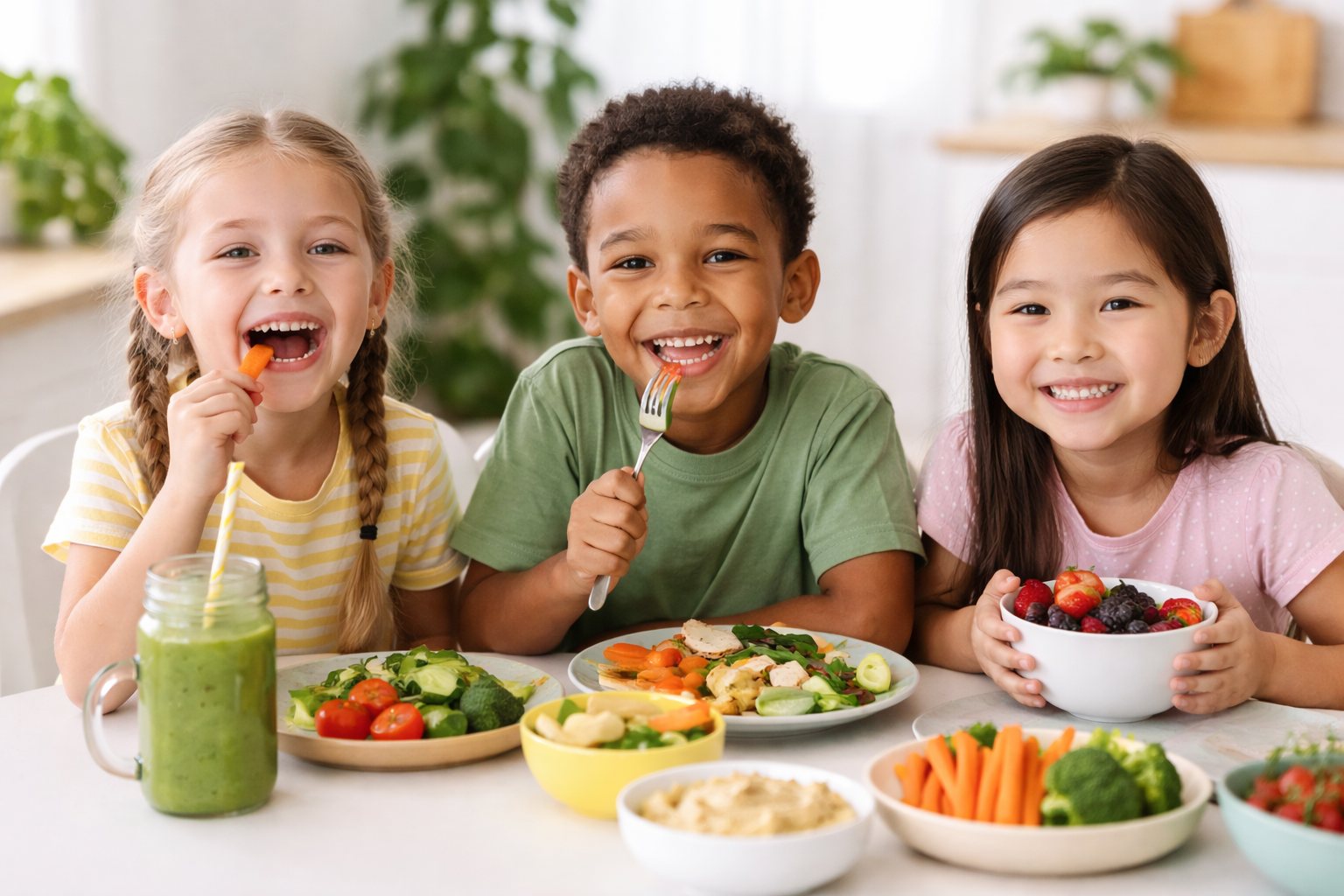
Offer a variety of foods from all five food groups
Children need exposure to a wide range of foods to meet their nutritional needs and develop flexible eating habits. Aim to regularly include:
- Vegetables and fruit - fresh, frozen or canned
- Grains - especially wholegrains
- Lean proteins - meat, chicken, fish, eggs, legumes, tofu
- Dairy or alternatives - milk, yoghurt, cheese or calcium fortified alternatives
This doesn’t mean every plate needs to look “perfect.” Think in terms of balance over time, not balance at every single meal.
Eat together as a family when possible
Shared meals are powerful. When children eat with caregivers, they:
- Observe healthy eating behaviours
- Feel more relaxed and connected
- Are more likely to try new foods
- Learn that eating is a normal, enjoyable part of life
Even one shared meal a day can support positive habits.
Let children decide how much to eat
o One of the most important skills children can develop is listening to their own hunger and fullness cues. This is supported when parents:
- Decide what foods are offered
- Decide when meals and snacks are offered
- Allow the child to decide how much they eat
Some days your child may eat a lot; other days very little. This is normal. Trusting this process helps children maintain a healthy relationship with food.
Avoid restricting food for weight control
Cutting portions, skipping meals or removing entire food groups in an attempt to manage weight can increase food obsession and anxiety. Children may become preoccupied with food or eat past fullness when restricted foods are available.
Avoid negative body or weight talk
Children absorb comments about bodies including comments about your own body. Try to avoid statements like:
- “I need to lose weight”
- “That food is bad”
- “You shouldn’t eat so much”
Instead, use neutral, body-respectful language and focus on what bodies can do, not how they look.
Avoid singling your child out
Placing one child “on a diet” or feeding them differently from the rest of the family can increase feelings of shame and isolation. Healthy habits are most effective when they are family-wide, not targeted at one child.
Balanced Eating Without Obsession
Healthy eating does not mean cutting out favourite foods or monitoring every bite. Children thrive when food is predictable, satisfying and enjoyable.
A helpful way to think about food is:
- Everyday foods - foods we eat often to support growth and energy
- Sometimes foods - foods that are part of social life and enjoyment
No food needs to be labelled as “bad.” When foods are neutral, children are less likely to overvalue them.
Sugary drinks such as soft drink, cordial and juice can displace more nourishing foods, so water is the best drink for thirst. Milk can also be part of meals and snacks, especially for younger children.
Rather than asking, “What should I take away?” try asking:
“What can I add to make this meal more nourishing?”
For example:
- Add fruit or yoghurt to breakfast
- Add vegetables to pasta, wraps or rice dishes
- Add protein or healthy fats to snacks to increase satisfaction
Making Mealtimes Feel Safe and Enjoyable
Mealtimes are about much more than nutrients. They are opportunities for learning, connection and confidence.
Supportive mealtime strategies include:
- Keeping meals calm and unrushed
- Avoiding pressure, bribing or forcing bites
- Offering new foods alongside familiar ones
- Accepting that learning to like a food takes time
It can take many exposures sometimes 10–20 or more before a child accepts a new food. This is part of normal development, not failure.
When mealtimes feel safe, children are more willing to explore and listen to their bodies.
What If You’re Feeling Stuck?
It’s completely normal to worry about your child’s eating at times especially if they’re fussy, have changing appetites, or grow differently from peers.
A paediatric dietitian can support you by:
- Assessing growth and intake in a non-judgemental way
- Helping you understand what’s normal and what’s not
- Creating practical strategies tailored to your family
You do not need to wait until things feel “bad enough” to seek support. Early guidance can bring reassurance and confidence.
You’re doing better than you think
There is no such thing as perfect feeding. There are busy days, takeaway nights, skipped vegetables and uneaten meals and that’s okay. What matters most is the overall environment you create around food.
By focusing on:
- Balance rather than restriction
- Trust rather than control
- Connection rather than pressure
You are helping your child develop a healthy relationship with food and their body that can last a lifetime.

Jessica Freese
About the author
Jess is an Accredited Practising Dietitian with a special interest in fertility, pregnancy, paediatrics, and women’s health. She’s passionate about making nutrition simple, practical, and empowering for every stage of life.


Get in touch.
Whether you’re seeking guidance, booking a consult, or exploring services, we’re here to make the process simple. Get in touch and let’s take the next step together.